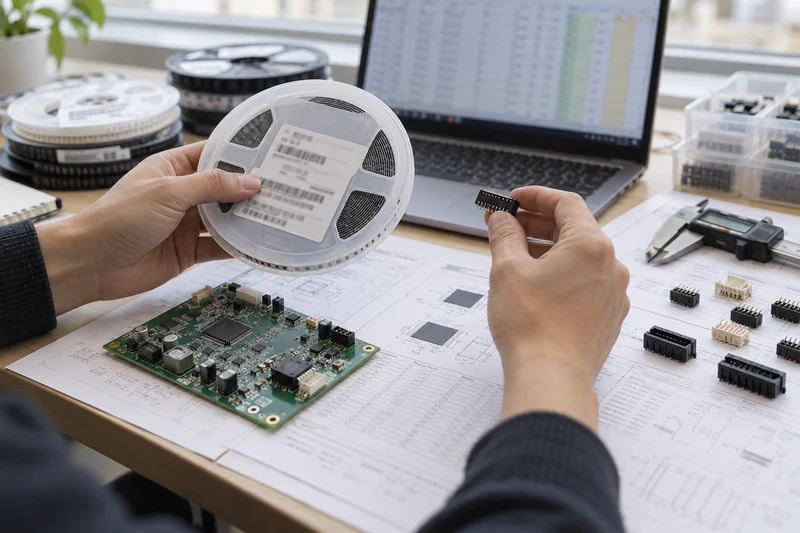
An unavailable component can create pressure to approve the first apparent equivalent. A controlled substitution takes a little more work: it connects purchasing urgency to engineering evidence and leaves a traceable decision for the next build.
REVIEW CHECKPOINTS
- Start with the reason for change
- Compare the complete interface
- Choose validation proportional to risk
- Approve the exact build usage
Start with the reason for change
Record the original manufacturer part number, the affected BOM revision, available inventory, forecast demand and the reason the original part cannot be used. A temporary shortage and a permanent end-of-life notice may call for different decisions. Ask whether an approved alternate already exists before creating a new one.
Compare the complete interface
Check electrical ratings, tolerances, pinout, footprint, thermal behavior, environmental limits and relevant certifications. Then look beyond the data sheet. A substitute may alter startup timing, calibration, radio performance, firmware drivers, mechanical clearance or the production test limits. Document each interface that could be affected and the owner who will review it.
For programmable or sensor components, confirm whether the firmware identifies a specific device or assumes a specific transfer function. For connectors and power parts, verify mechanical fit and assembly handling as well as nominal ratings.
- Electrical and functional fit
- PCB footprint and assembly fit
- Firmware and calibration impact
- Test coverage and acceptance limits
- Supplier provenance and incoming inspection
Choose validation proportional to risk
A low-risk passive part and a new wireless module do not need the same review. Decide which bench tests, environmental checks, fixture changes or pilot units are required before approval. Keep the result with the BOM decision record. A failed test should remain visible alongside any subsequent corrective action and retest.
Approve the exact build usage
State whether the alternate is approved for all future builds, a defined pilot lot or only a controlled exception. Record the approver, the effective BOM revision and any labeling or traceability requirement. This prevents a temporary purchasing decision from becoming an undocumented product configuration.
The Hardware Engineering and Pilot Build Support page explains where sourcing review fits into a broader build handoff. The Hardware Build Records page shows an illustrative decision format.
General engineering guidance. Validation and acceptance criteria depend on your product and intended use.